
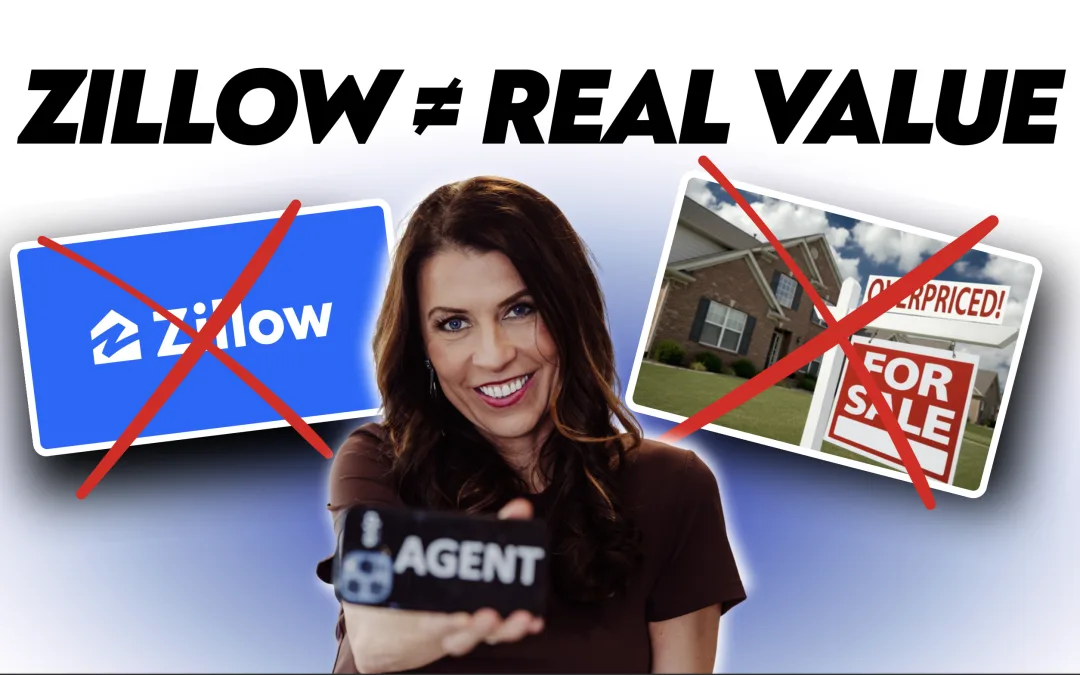
If you’re thinking about selling your home in Cincinnati, Zillow is probably the first tab you open. Totally normal. Most people do it. You check your Zestimate, stare at that number, and think: “Okay… so that’s what my house is worth.”
Here’s the truth: Zillow is a helpful starting point, but it does not give you the full picture. Zillow itself explains that a Zestimate is an estimate of market value based on available data, not a full in-person evaluation.
And when you’re selling a home, “close enough” can still mean leaving money on the table or pricing too high and watching your listing sit.
In this guide, I’ll break down what Zillow can’t see, why Zestimate and real sale prices do not always match, especially in Greater Cincinnati micro-markets, and what smart sellers should do instead.
In This Guide
Zillow is useful, just not for the final number
Zillow is great for browsing. You can get a quick feel for listings, photos, and broad market direction. It is fast, easy, and honestly fun.
But the Zestimate is not a guarantee of what your home will sell for. Zillow is clear that it is an estimate built from data inputs and modeling, not a walkthrough of your home’s condition, updates, layout, or presentation.
That distinction matters because buyers do not buy data. Buyers buy what they feel when they walk through your front door.
Zestimate vs sale price: what Zillow says about accuracy
Zillow publishes median error rates for Zestimates. Nationally, Zillow says that for on-market homes, half of Zestimates are within roughly 2% of the eventual sale price, and half are not. For off-market homes, the typical error is much larger, roughly 7%.
That is not “good” or “bad.” That is just reality. The Zestimate becomes more accurate when there is fresh public listing data feeding it.
What Zillow can’t see, and what Cincinnati buyers absolutely notice
This is the part many sellers do not realize until they are already on the market. Zillow cannot walk through your home, feel what a buyer feels, or notice the things that change perceived value instantly.
Your home’s real condition and presentation
Fresh paint, updated flooring, a cleaner layout, staged rooms, better lighting, and overall presentation all shape how buyers react. Zillow does not experience any of that the way a buyer does in person.
Micro-neighborhood demand in Greater Cincinnati
In Cincinnati, two homes can be five to ten minutes apart and perform very differently based on buyer demand, street appeal, layout preferences, school boundaries, commuting patterns, and what is currently happening in that specific pocket of the market.
The little things buyers pay premiums for
Think cul-de-sacs, privacy, quiet streets, lot shape, sunlight, backyard feel, and that hard-to-measure sense of “this feels like home.”
Zillow can estimate. Buyers decide.
The pricing trap: Zillow can push sellers into overpricing or underpricing
Here is what I see all the time. If your Zestimate is high, it is tempting to price high because “Zillow says so.” If your Zestimate is low, it can create panic and sellers start discounting before they even test the market.
Both paths can cost you.
A Zestimate is a planning tool, not a pricing strategy. The right list price is not just a number. It is a strategy based on:
- what buyers are paying right now
- how your home shows compared to alternatives
- current inventory and competition
- your timing goals, whether that is speed, price, or balance
The Zillow change sellers should know about: Listing Access Standards
Zillow introduced Listing Access Standards around a simple idea: if a listing is marketed to some buyers, it should be marketed to all buyers.
Zillow’s standard says that publicly marketed listings should be entered into the MLS within one business day so they can be broadly visible, including on portals that receive MLS feeds.
Quick note for buyers: the “Contact Agent” button is not always what you think
Many real estate portals operate on lead-routing systems, so inquiries can go to partner agents instead of the listing agent you assumed you were contacting.
If you want hyper-accurate details on a home, the safest move is to work with an agent you trust, or specifically ask for the listing agent when appropriate.
So what should you do if you’re selling in Cincinnati?
Use Zillow as the first look, not the final answer.
Start with the estimate
Use Zillow to get context, recent listing awareness, and broad market direction.
Finish with strategy
Look at your home the way buyers will, compare it to live competition, and build a pricing plan around real-time demand.
If you want a clearer picture of what your home could sell for, not just a rough estimate, local expertise matters.
You can learn more about Monika DeRoussel’s seller process here:
Explore Monika DeRoussel’s seller process.
Frequently Asked Questions About Zillow and Selling Your Home
Is Zillow accurate for home values in Cincinnati?
Why does my Zestimate change so often?
Can I price my home based only on my Zestimate?
Why do similar homes sell for very different prices?
Does Zillow fully see renovations or upgrades?
What are Zillow’s Listing Access Standards, and why do they matter?
Should I talk to an agent before trusting Zillow?
Why work with Monika DeRoussel instead of relying only on Zillow?
Ready for a real number, not robot math?
If you’re considering selling in 2026, Monika DeRoussel can help you figure out what Zillow can’t: what buyers in your Cincinnati-area neighborhood are paying right now, and what pricing strategy gives you the best shot at a strong offer without unnecessary stress.
Send Monika DeRoussel your address, or just your neighborhood plus a few basic home details, and she can give you a clearer Cincinnati-specific opinion you can actually use to plan your next move.
Not ready to talk yet? Use Monika DeRoussel’s home value tool as a starting point: Get an instant estimate.
